

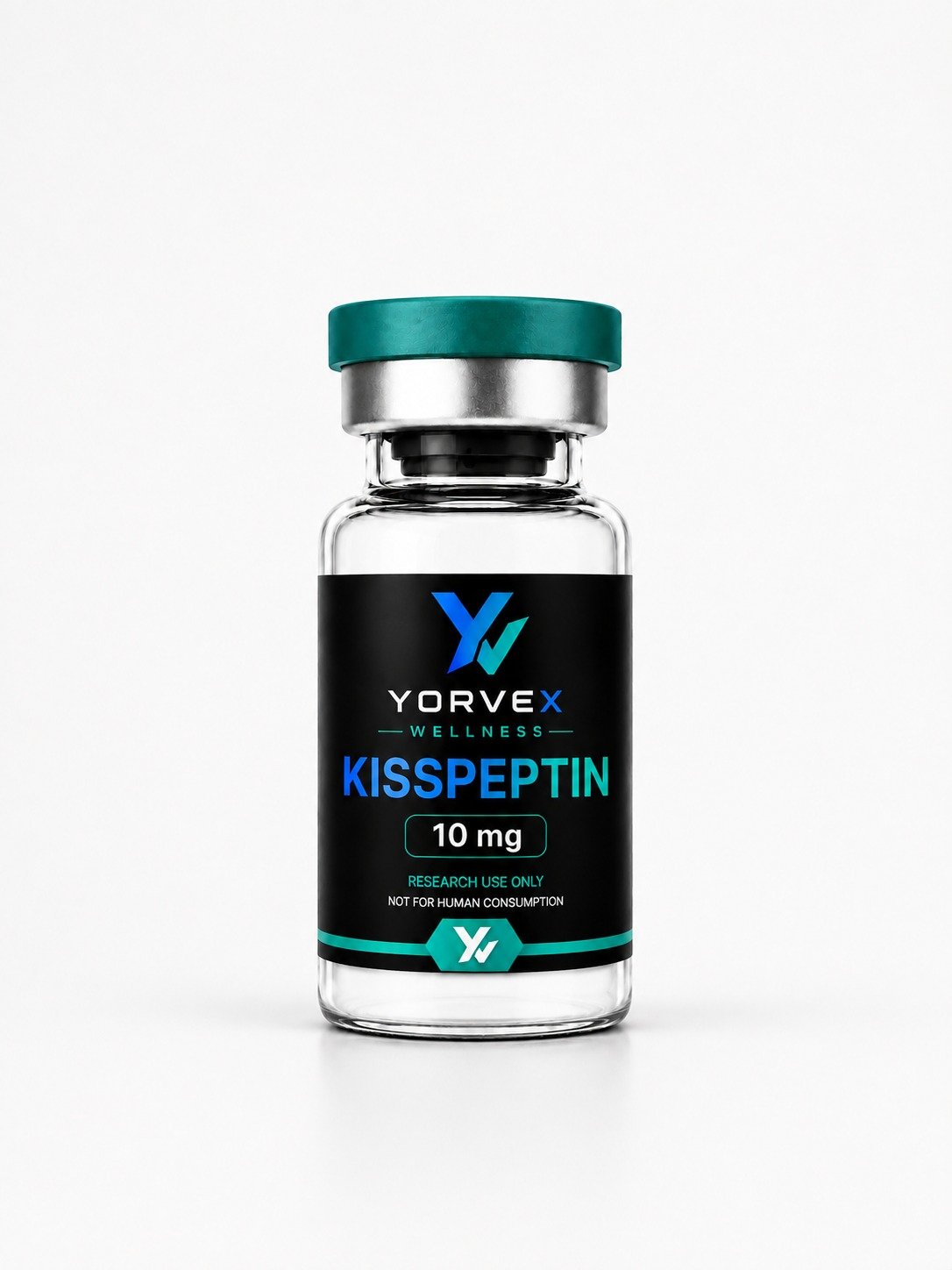

About This Research Material
Kisspeptin-10 is a synthetic decapeptide derived from the kisspeptin family of neuropeptides and is widely used as an experimental tool for investigating the neuroendocrine regulation of reproductive function. The 10 mg material supplied here is intended for in-vitro and preclinical research applications only. Kisspeptin-10 represents the biologically active core fragment of kisspeptin and is studied primarily because of its ability to interact with the kisspeptin receptor, KISS1R (also known as GPR54), within the hypothalamic reproductive axis.
Kisspeptin signaling occupies an important upstream position in reproductive neuroendocrinology. Activation of KISS1R on hypothalamic GnRH neurons can stimulate the release of gonadotropin-releasing hormone (GnRH), which in turn regulates pituitary secretion of luteinizing hormone (LH) and follicle-stimulating hormone (FSH). This signaling cascade makes Kisspeptin-10 a useful pharmacological probe for studying the relationship between hypothalamic kisspeptin signaling, GnRH secretion, gonadotropin release, and downstream reproductive physiology.
The material described here is intended solely as a characterized research compound for controlled laboratory investigation. It is not presented as an approved therapeutic product, and experimental observations should not be interpreted as evidence of clinical efficacy or suitability for human use.
What Has Been Studied
Research involving Kisspeptin-10 has focused primarily on its role as an experimental activator of the hypothalamic-pituitary-gonadal axis. Reported research areas include:
* *KISS1R receptor signaling:* cell-based and receptor-pharmacology studies investigating activation of the KISS1R/GPR54 receptor and associated intracellular signaling pathways.
* *GnRH regulation:* experimental models examining how kisspeptin signaling influences GnRH neurons and the release of GnRH from the hypothalamus.
* *LH and FSH secretion:* laboratory and clinical research evaluating changes in pituitary gonadotropin secretion following kisspeptin stimulation.
* *Reproductive-axis modeling:* preclinical and human research using kisspeptin as a pharmacological probe for studying reproductive neuroendocrinology and the control of gonadal function.
* *Ovulatory signaling:* experimental studies have investigated kisspeptin-mediated activation of the reproductive axis in relation to the hormonal events associated with ovulation.
* *Fertility research:* kisspeptin signaling has been investigated as a potential physiological regulator of reproductive function, while its experimental use continues to be evaluated across different research models.
Because kisspeptin responses can vary according to experimental model, biological sex, reproductive state, administration conditions, sampling time, and other methodological factors, results from individual studies should not be generalized across systems without appropriate validation. The available evidence remains primarily mechanistic and research-oriented for many applications, and experimental observations do not establish a therapeutic indication.
Analytical Characterization
For a synthetic peptide such as Kisspeptin-10, analytical characterization is important for confirming sequence identity, chemical integrity, and batch consistency. Research-grade material may be evaluated using reversed-phase high-performance liquid chromatography (RP-HPLC) to determine chromatographic purity, with the principal peak reported as a percentage of the detected peptide-related material.
Mass spectrometry, including techniques such as ESI-MS or MALDI-TOF, can be used to confirm molecular identity by comparing the experimentally measured molecular mass with the expected mass of the Kisspeptin-10 peptide. Depending on the supplier and production process, additional analytical information may include peptide content, water content, residual solvent or counter-ion characterization, and other lot-specific quality measurements.
A lot-specific Certificate of Analysis (COA) should be reviewed when available. Researchers evaluating a batch generally examine the reported HPLC purity, chromatographic profile, mass-spectrometry identity confirmation, and net peptide content before incorporating the material into quantitative experiments. These measurements help distinguish analytical purity from the total mass of the lyophilized vial contents and support reproducible preparation of experimental samples.
Laboratory Handling and Storage
Kisspeptin-10 supplied as a lyophilized research peptide should remain sealed and protected from excessive heat, moisture, and light. Long-term storage conditions should follow the manufacturer’s lot-specific recommendations, with cold, dry storage commonly used for lyophilized research peptides.
Once reconstituted, peptide solutions may exhibit different stability characteristics from the dry material. Stability depends on factors including solvent or buffer composition, concentration, temperature, container material, and the number of freeze-thaw cycles. Researchers should therefore follow validated laboratory handling procedures and the supplier’s current stability documentation rather than assuming a universal post-reconstitution storage period.
These handling considerations are provided for controlled laboratory research only and do not imply or recommend human administration.
Research Status
Kisspeptin-10 remains an important experimental tool in reproductive neuroendocrinology because it provides a means of interrogating the KISS1R → GnRH → LH/FSH signaling pathway. Research continues to examine the physiological regulation of kisspeptin signaling, receptor pharmacology, reproductive-axis dynamics, and its potential applications as a research probe.
The material described on this page is *for research use only* and is *not intended for human consumption or use as a therapeutic product*. Experimental findings should be interpreted within the specific biological and methodological context in which they were obtained.
Reviews
There are no reviews yet.