

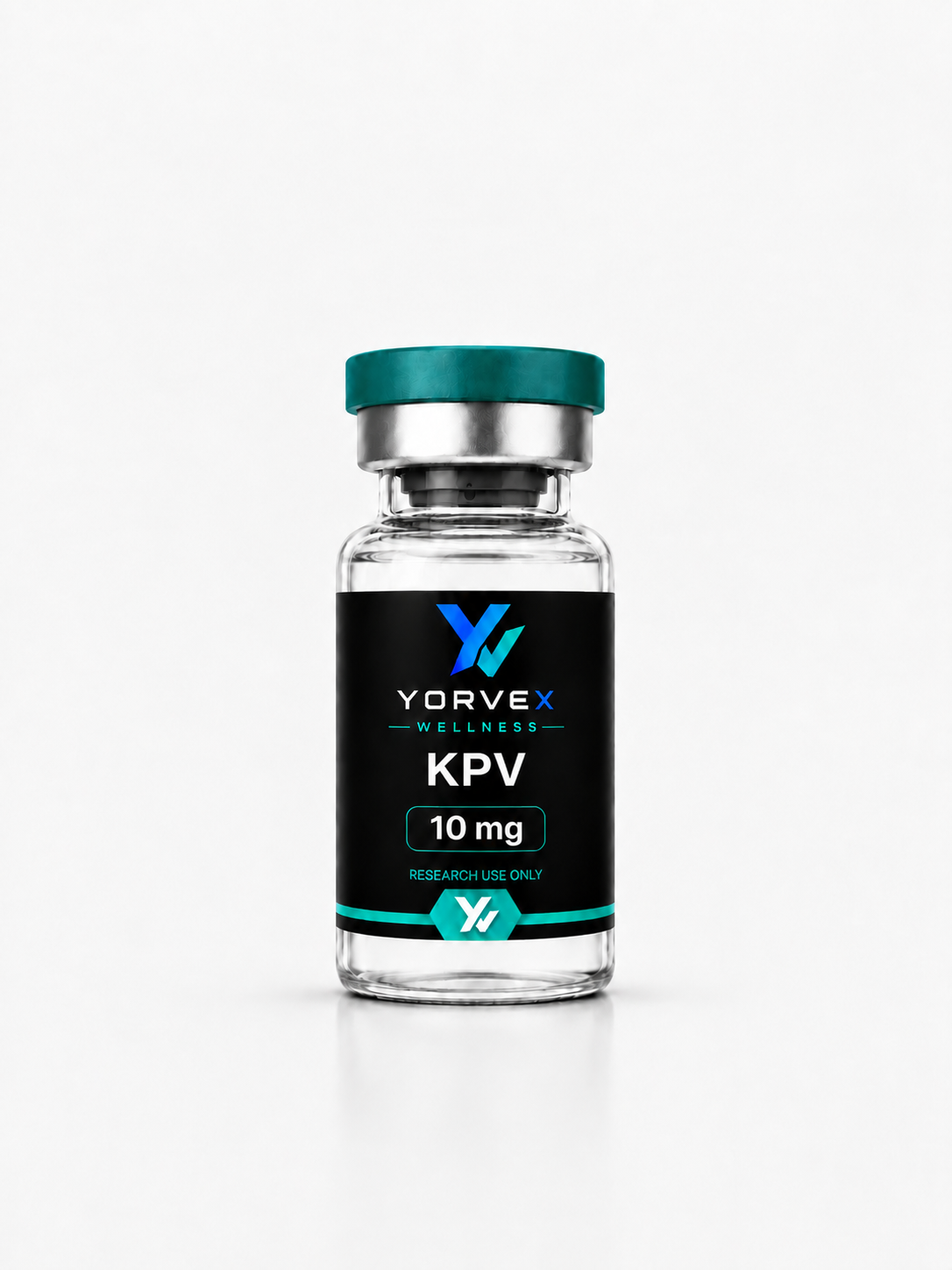
KPV Research Background
KPV is a synthetic tripeptide composed of three amino acids in sequence — L-lysine, L-proline, and L-valine (Lys-Pro-Val) — corresponding to the C-terminal residues of alpha-melanocyte-stimulating hormone (alpha-MSH). Because it reproduces only the terminal fragment of the parent 13-residue hormone rather than the full sequence, KPV is studied in the research literature as a minimal, sequence-defined peptide that retains reported activity associated with the alpha-MSH C-terminus while lacking the melanocortin-receptor pigment-signaling portion of the molecule. This listing supplies the free tripeptide (CAS 67727-97-3, C16H30N4O4) as a lyophilized reference material for in-vitro and preclinical laboratory work only.
Interest in KPV as a research material stems from its small size and its documented relationship to alpha-MSH. In published preclinical models, its reported activity is frequently linked to inhibition of NF-κB (nuclear factor kappa B) activation, a transcription-factor pathway central to inflammatory signaling, and to cellular uptake mediated by the peptide transporter PepT1 (SLC15A1) expressed on epithelial and immune cells. Investigators use it as a tool compound to probe how a short tripeptide is internalized and how it intersects with inflammatory transcriptional pathways in cultured cells. This body of work remains preliminary and ongoing, and cell-based or rodent-model findings should not be extrapolated to human or animal outcomes.
What Has Been Studied in Preclinical Models
Published investigations of KPV are predominantly in-vitro and rodent-model in nature, typically using intestinal epithelial cell lines and cultured immune cells. Reported experimental lines of inquiry concern the peptide’s route of entry through PepT1, its influence on NF-κB nuclear translocation and downstream pro-inflammatory cytokine expression in cell models, and its behavior in chemically induced colitis models used to study mucosal inflammation. Because KPV is a PepT1 substrate, some analytical work also examines transporter-mediated uptake kinetics relative to di- and tripeptide standards.
- Cell-culture models using intestinal epithelial lines (e.g., Caco-2/HT-29-type systems) examining NF-κB pathway activity and cytokine readouts.
- PepT1-mediated transport assays characterizing tripeptide uptake and competition with other peptide substrates.
- Rodent colitis models used as preclinical systems for studying mucosal inflammatory endpoints.
- Comparative studies contrasting KPV with the parent alpha-MSH sequence and with scrambled or inactive control peptides.
Analytical Characterization
Each research lot is supplied as a lyophilized powder and characterized before release, with a Certificate of Analysis (COA) that separates purity (how much of the sample is the target tripeptide) from identity (confirmation that the target is the correct molecule). For a short, sequence-defined tripeptide like KPV, the theoretical average mass calculated from the molecular formula C16H30N4O4 is approximately 342.4 Da, and mass-spectrometric identity testing is used to confirm the observed mass matches this expected value for the Lys-Pro-Val sequence.
- HPLC (RP-HPLC) purity: quantified by peak-area integration, with lot purity reported on the COA (specified here as ≥ 99%). The chromatogram resolves the main KPV peak from process-related impurities, deletion sequences, and residual reagents.
- Mass-spectrometry identity: ESI-MS or MALDI-TOF confirms the observed mass (~342.4 Da average) against the theoretical value for C16H30N4O4, verifying molecular identity of the tripeptide.
- Supporting data: appearance, net peptide content, and residual-solvent or water-content checks where applicable, plus counter-ion characterization where the peptide is supplied as a salt (e.g., acetate) rather than the free base.
The COA accompanying each product is the definitive analytical record for that specific lot. Because purity and net peptide content can vary slightly between synthesis batches, researchers should reference the COA tied to the lot number received rather than generic specifications when documenting experimental inputs and calculating stock concentrations. Retaining the COA alongside experimental records supports reproducibility and traceability.
Laboratory Handling of Lyophilized Material
As a lyophilized peptide, KPV is hygroscopic and sensitive to repeated temperature cycling. Standard laboratory practice is to allow sealed vials to equilibrate to room temperature before opening to minimize condensation, and to reconstitute with an appropriate research-grade solvent under aseptic technique. Aliquoting reconstituted stock into single-use portions limits freeze-thaw cycles that can degrade peptide integrity. Detailed temperature and stability windows for lyophilized, reconstituted, and working solutions appear in the storage table on this page. All handling described here is standard laboratory practice and is not instruction for human or animal use.
Reviews
There are no reviews yet.